Trump Initiates Rare Move to Revoke $5 Billion in Foreign Aid
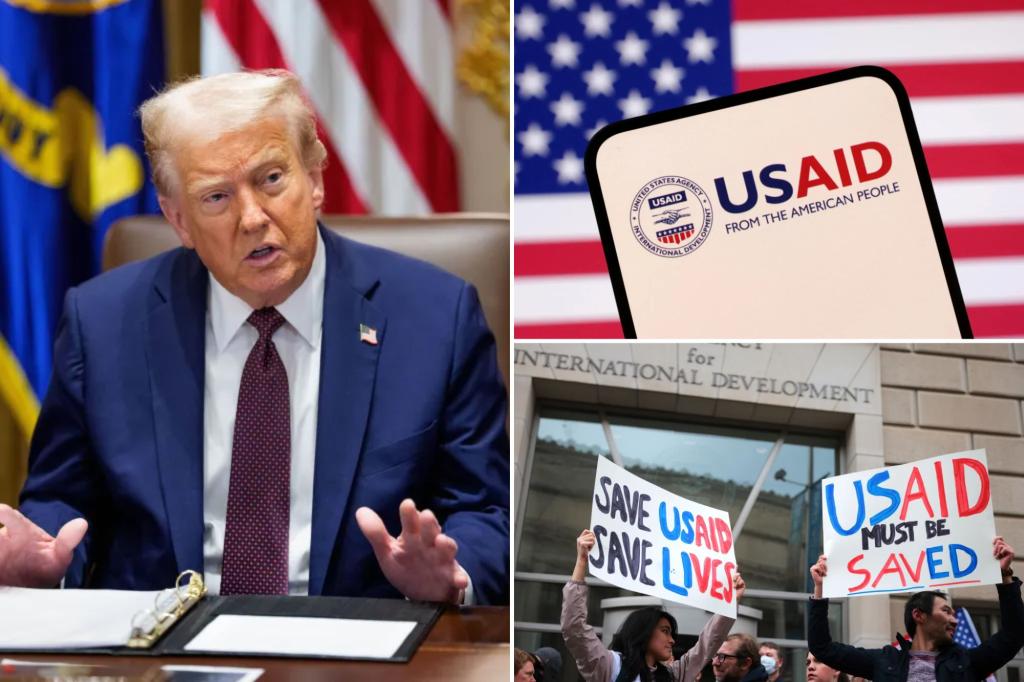
WASHINGTON — President Trump is taking steps to annul nearly $5 billion in previously approved foreign aid and peacekeeping funds through an unusual “pocket rescission,” a tactic not used in nearly five decades.
On Thursday evening, Trump formally informed Congress of his intention to retract these funds, which had been entangled in a legal dispute until recently.
A pocket rescission is a request made to Congress so late in the fiscal year—ending September 30—that it proceeds irrespective of Congressional actions.
The cancellation plan comprises $3.2 billion in development assistance from the United States Agency for International Development (USAID), $322 million from the USAID-State Department Democracy Fund, $521 million in State Department contributions to international organizations, $393 million for peacekeeping operations, and an additional $445 million in peacekeeping aid.
Earlier this week, the D.C. Circuit Court of Appeals lifted an injunction on the matter, clearing the way for Trump’s administration to attempt the first pocket rescission since 1977.
The Trump administration has pointed to various expenditures deemed unnecessary, such as $24.6 million allocated for “climate resilience” initiatives in Honduras and $3.9 million aimed at promoting democracy among LGBTQ+ individuals in the Western Balkans. Other allocations of note include $1.5 million for showcasing artworks by Ukrainian women.
The peacekeeping funds targeted for elimination include approximately $838 million, which would affect contributions to U.N. peacekeeping forces in regions such as the Democratic Republic of the Congo, where the Trump administration facilitated a peace agreement with Rwanda, and the Central African Republic, a mission criticized for perceived alignment with Russian commercial interests.
The proposed cuts do not impact U.S. support for the Multinational Force and Observers mission situated along the Egyptian-Israeli border.
The legality of pocket rescissions remains hotly contested, with scant judicial precedent. The Government Accountability Office (GAO) deems them unlawful; however, Trump’s Office of Management and Budget (OMB) disputes this.
The Impoundment Control Act of 1974 restricts the President’s ability to withhold appropriated funds and outlines processes for legislative rescissions—like a recent package signed by Trump removing $1 billion from NPR and PBS and an additional $8 billion from USAID.
This legislation imposes a 45-day deadline for Congress to act on the rescissions proposed by the President.
OMB officials have cited instances during the 1970s when Presidents Gerald Ford and Jimmy Carter seemingly executed pocket rescissions. Carter, for example, submitted several proposals to Congress in July 1977, with some funds lapsing either before or shortly after the 45-day withholding period, as noted in a 2018 letter by OMB General Counsel Mark Paoletta to the GAO.
Paoletta has argued that a 1975 GAO opinion validated the practice but claims the office altered its position during Trump’s first term due to what he described as “Trump Derangement Syndrome.”
The GAO is positioned to potentially litigate against Trump’s pocket rescission, particularly following the conclusion of the D.C. Circuit Court case involving the same funds, which found that private litigants cannot enforce the Impoundment Control Act.
However, uncertainties about whether the GAO will proceed with legal action remain, fueled by theories regarding the constitutional status of the current comptroller general, Eugene Louis Dodaro.

Passionate journalist and digital news editor with a keen eye for global affairs and emerging trends. As the founder and lead writer of RSS News US, he is dedicated to delivering accurate, insightful, and engaging content to readers seeking trustworthy news in a fast-paced world.