South Carolina Struggles with Hate Crime Legislation Amid Rising Tensions
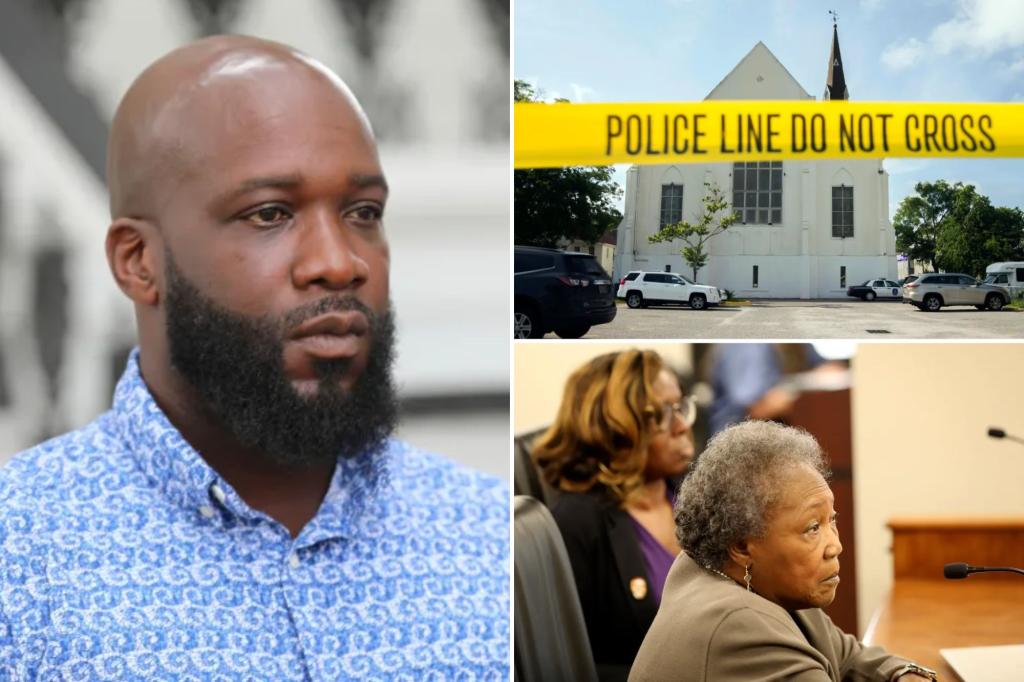
COLUMBIA, S.C. — Jarvis McKenzie was taken aback when he encountered a man in a car whose eyes radiated disdain.
After the man brandished a rifle, shot in McKenzie’s direction, and shouted, “You better get running, boy!” as McKenzie ducked behind a wall, it became painfully clear that the aggression stemmed from McKenzie’s race.
A month after this incident, McKenzie shared his experience, highlighting South Carolina’s status as one of only two states, alongside Wyoming, that lack formal hate crime statutes.
Local authorities have initiated their own hate crime ordinances, driving an effort to press the state Senate into voting on legislation that would impose stricter sanctions for offenses motivated by race, religion, sexual orientation, gender, or ethnicity.
Despite a decade of advocacy from various businesses, affected families from the devastating 2015 Charleston church shooting that resulted in nine fatalities, and even some Republican legislators, the Senate remains unyielded.
Local initiatives on hate crimes face limitations
Richland County, where McKenzie resides, has enacted a hate crime ordinance. The white male suspect captured on surveillance while firing through McKenzie’s car window in his neighborhood on July 24 is the initial individual to be charged under this ordinance.
Nevertheless, the local laws are limited to misdemeanor offenses, with penalties confined to a maximum of one month in jail. Conversely, the proposed state legislation, championed by business advocates, would allow for lengthier sentences for violent crimes related to hate.
For a year, McKenzie waited each morning at the outskirts of his neighborhood for his work supervisor. Now, every outing is tinged with anxiety and fear for him and his family.
“It’s distressing to think that as I stand there every morning, I might be recognized again,” McKenzie remarked.
Legislative efforts flounder since 2015 church attack
The absence of a statewide hate crime law became a significant issue in South Carolina following the 2015 massacre at Emanuel AME Church in Charleston, where nine Black worshippers were killed. After significant racial unrest in 2020, local business leaders prioritized the issue, leading the South Carolina House to pass its own proposal in 2021.
However, both in 2021 and the subsequent 2023 session, this bill has stalled in the Senate, failing to secure a vote. Advocates suggest that Republican leaders are aware of its potential for passage, given the support from more moderate party members, yet they continue to sideline the bill through procedural tactics.
The opposition appears muted, with the bill being briefly acknowledged during discussions on different topics, such as a May 2023 debate regarding educational curriculum guidelines.
“The sentiment among some is that this is not only feel-good legislation but could be detrimental policy by fostering division,” Senate Majority Leader Shane Massey explained during a Senate session.
Advocates argue that federal laws are inadequate
Critics of a state hate crime statute often reference the existence of a federal hate crime law, noting that the perpetrator of the Charleston shooting has been sentenced to death under federal jurisdiction.
However, local authorities emphasize that federal resources are limited, especially concerning juvenile offenses, and decisions about prosecution are made far from the affected communities. Richland County Sheriff Leon Lott, a proponent of local hate crime measures, articulated the need for straightforward legislation that addresses hate-motivated crimes effectively.
“It’s basic logic; we are complicating what should be simple. If someone commits an offense motivated by hate, we must recognize it as such,” Lott asserted.
Ongoing frustrations among state lawmakers
Democratic senators expressed frustration as they observed discussions about extending harsher penalties for violence against specific groups, while hate crime legislation repeatedly fails to progress.
Supporters of a state hate crime law contend that the lack of such legislation fosters an environment that emboldens hate groups.
“The underlying message is that if you wish to act upon racist sentiments and target individuals for their race, ethnicity, or sexual orientation, you can do so without consequence here,” claimed McKenzie’s attorney, Tyler Bailey.
Governor maintains existing laws are sufficient
Governor Henry McMaster acknowledged the rationale behind local governments devising their own hate crime laws but insists that existing state laws regarding violent crime are sufficient, allowing judges to impose maximum sentences when hate is identified as a driving factor.
“There’s no such thing as a love crime; every act of violence carries an element of hatred,” explained McMaster, who expressed concern about potential overreach in assessing motives.
Sheriff Lott advocates for comprehensive protections across communities.
“It is vital to foster a sense of security for everyone. Our Constitution safeguards these rights for all,” he noted.
Currently, while the individual charged with assaulting McKenzie faces a potential 20-year sentence, McKenzie himself feels the emotional impact of living in a state that seems indifferent to the terror he experienced due to his race.
“Sometimes, it feels like I am being watched, as though someone is pursuing me,” McKenzie shared. “It’s unnervingly unsettling.”

Passionate journalist and digital news editor with a keen eye for global affairs and emerging trends. As the founder and lead writer of RSS News US, he is dedicated to delivering accurate, insightful, and engaging content to readers seeking trustworthy news in a fast-paced world.